Category: Spring 2009

Letter from the Editors

By Barbara Crow, Michael Longford, Kim Sawchuk, and Andrea Zeffiro

Welcome to “Active Radio”, the second issue of Wi: The Journal of Mobile Media. This issue was guest edited by Owen Chapman from the department of Communication Studies, Concordia University, and focuses on the role and place of radio in mobility studies. We have worked hard in tandem with Owen and the authors, and are pleased to bring you an issue that engages with and questions the relationship between radio and mobile practices.

“Active Radio” Issue Launch

To celebrate the “Active Radio” issue of Wi: The Journal of Mobile Media, the following is a video documentation of the launch event in which featured a live demonstration of the early electronic musical instrument, les Ondes Martenot, by Jean Laurendeau–a…

Active Radio: Editorial

By Owen Chapman

For about 6 months in 2008 there was a mysterious sound in my house. No matter how we tried, we could not locate the source of a periodic buzzing that would quickly arrive and then vanish. I noticed it more during the daytime, when the house was still. It sounded like some kind of small motor. But for a while I even thought it was our back screen-door, blowing open with the wind. It was disquieting.

Radio as Instrument

By Anna Friz

Radio at its most basic is the perception of frequencies in the electromagnetic spectrum between 3Hz and 3000MHz, or below visible light. In our current configuration, terrestrial radio is characterized by wireless transmission in the service of point-to-point communications: a process of modulating electromagnetic radiation which occurs by changing the amplitude or frequency of the radio waves from a point (the transmitter). The modulated waves carry information to another point via transduction and transmission: for instance, sound waves are transduced from human mouths through microphones into signals, which radiate from a transmitter antenna, travel through space, are detected by receiver antennas, and are in turn transduced by vacuum tubes or transistors and speakers into sound waves audible to the human ear. When the term ‘radio’ is invoked, people commonly think of either a radio receiver apparatus, the activity of broadcasting from a radio station, the programming, the branded name of a radio station, or a location (channel) on the AM/FM radio dial.

Maurice Martenot, alchimiste de l’électricité

By Caroline Martel

« En cette matière musicale plus qu’en aucune autre peut-être, le lien, la mystérieuse alchimie entre l’inné et l’acquis se manifeste et règne. […] Et voici que la pâte travaille l’ouvrier qui la pétrit, l’oblige à une ascèse, le soulève et le modifie dans le temps, au-delà même de l’apprentissage du jeu. »
– Jeanne Loriod, Technique de l’Onde électronique

The Fourth Track: Re-visiting the Cassette-Based Portastudio

By Samuel Thulin

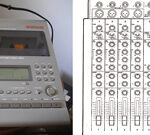
Through a series of experiments with the Tascam 464 Portastudio this project examines the cassette-based multi-track recorder as an obsolete technology, an articulation of mobility and sound-recording, and a site for creative possibilities. These three perspectives on the device are integrally linked, as I argue that 1) the obsolescence of the portastudio provides an opportunity for a re-consideration of the technology, 2) that this re-consideration is best effected not only through theorization but through practice – that is, active and creative exploration of the device – and 3) that the combination of theory and practice in the context of the portastudio’s obsolescence reveals important connections between this 30-year old technology and ideas around portability, mobility, and sound-recording processes.

Radio Activity: Articulating the Theremin, Ondes Martenot and Hammond Organ

By Owen Chapman

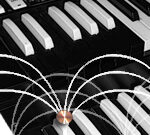
The Ondes Martenot was introduced in 1928 by cellist and pedagogue Maurice Martenot (1898-1980). His initial design used Audion tubes (patented by Lee deForest in 1906) to create two supersonic radio signals transmitted at frequencies very close, but not identical in terms of Hertz–producing a resultant beat frequency within the audible realm. Martenot’s invention allowed one to change the frequency of one radio wave in the pair it emitted–affecting the audible pitch produced. The first version had the player pull or release a ring on a wire in order to slide freely between different pitches. Later versions saw this mechanism extended horizontally over a fake keyboard, allowing one to select specific “notes.” Real keys came a short time later.